

Standard Australian pallet dimensions influence far more than storage space. Pallet size affects warehouse storage compatibility, freight planning, load safety and export compliance.
Pallets sit at the centre of modern logistics operations. Warehouses store them, forklifts move them, and freight networks rely on them to transport goods safely. Standard Australian pallet dimensions influence how goods are arranged inside trucks, containers and distribution vehicles.
The most widely used pallet size in Australia measures 1165mm by 1165mm. This square pallet design allows efficient loading inside Australian trucks, rail containers and warehouse storage layouts.
Selecting the right pallet involves more than just size. Load weight, storage methods, industry requirements and export regulations all influence pallet selection.
Understanding standard Australian pallet dimensions helps businesses plan storage systems, organise freight efficiently and maintain safe warehouse operations.
The Quick Version
- The standard Australian pallet size is 1165mm × 1165mm, designed to optimise freight loading across trucks, rail containers and warehouse systems.
- Most pallets measure 130–150mm in height, allowing forklifts and pallet jacks to access loads safely.
- Pallet capacity depends on static, dynamic and racking load ratings, with racking load usually being the most restrictive.
- Warehouse racking systems are typically designed around standard Australian pallet dimensions, ensuring safe storage and efficient space use.
- Export pallets must comply with ISPM 15, requiring heat treatment and an IPPC stamp for international shipments.
- While the standard size suits most operations, custom pallets may be required for heavy loads, unusual products or specialised handling systems.
What Are Standard Australian Pallet Dimensions?
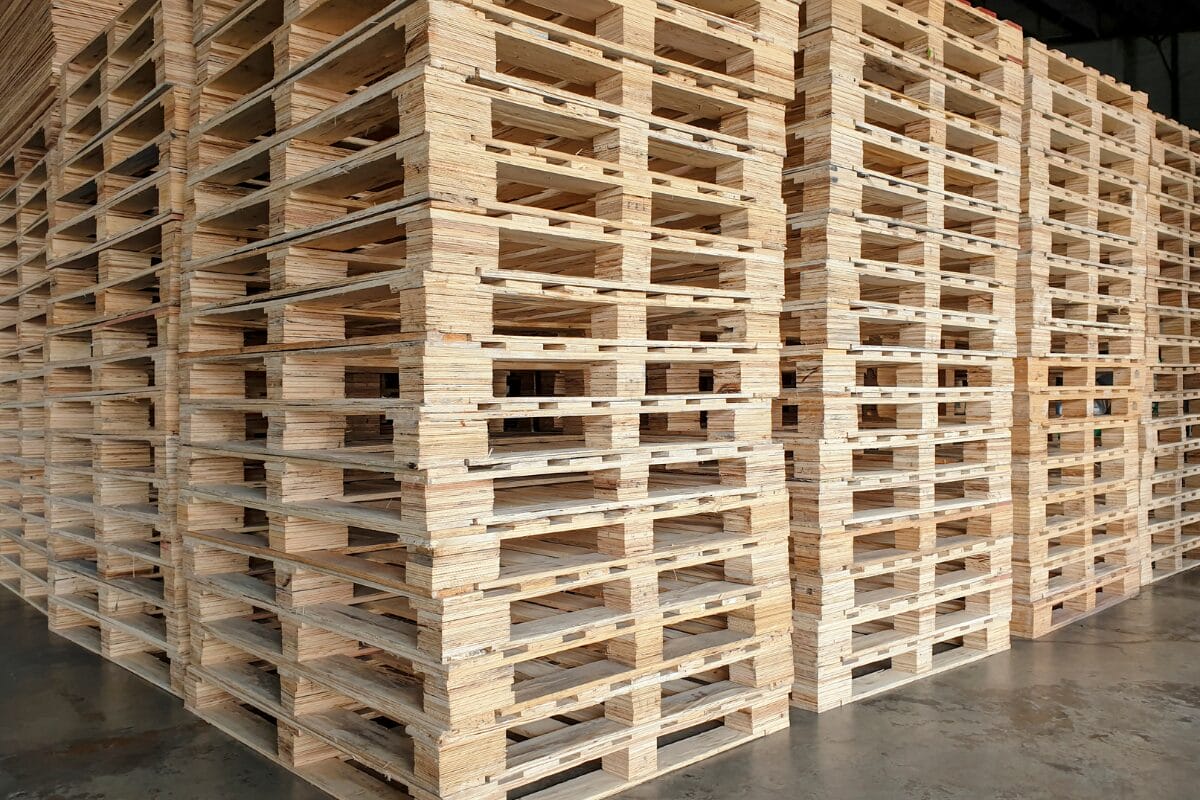
The standard Australian pallet measures 1165mm by 1165mm. This square pallet format is widely used across warehousing, freight transport and national distribution systems.
The pallet standard was originally developed to suit Australian rail freight infrastructure. Early rail containers were designed to transport palletised goods efficiently, and the square footprint allowed containers to be loaded with minimal wasted space. Over time, the same format became widely adopted across road transport and warehouse storage environments.
Today, the Australian pallet standard integrates with warehouse storage systems, forklifts and national freight networks.
| Specification | Standard Range |
| Length | 1165 mm |
| Width | 1165 mm |
| Height | 130 to 150 mm |
| Entry | Two-way forklift entry |
| Material | Mostly timber |
Using a uniform pallet format allows goods to move through warehouses and freight systems without needing to repack or adjust loads during handling.
Standardisation also allows suppliers, warehouses and transport operators to work with the same pallet format across multiple stages of distribution.
Why Australia Uses a Square Pallet Design
Unlike many international pallet standards, the Australian pallet uses a square footprint. The 1165mm by 1165mm format was originally developed to suit Australia’s rail freight system.
Early rail containers used in Australian freight networks were designed to carry palletised goods efficiently. The square pallet allowed containers to be loaded with minimal wasted space while maintaining stable weight distribution during transport.
Over time, the same pallet format became widely adopted across warehouse storage systems and road transport. Because the size works efficiently across multiple parts of the logistics chain, it became the dominant pallet format used throughout Australia.
This consistency allows warehouses, freight operators and suppliers to operate with compatible equipment and storage layouts across the supply chain.
Typical Pallet Height and Load Ratings
The footprint of the Australian pallet standard remains consistent across warehouses, transport equipment and storage systems. Height and load capacity can vary depending on pallet construction, timber grade and intended application.
Understanding these specifications helps businesses select pallets that match their storage layouts, load weights and handling equipment.
Pallet Height
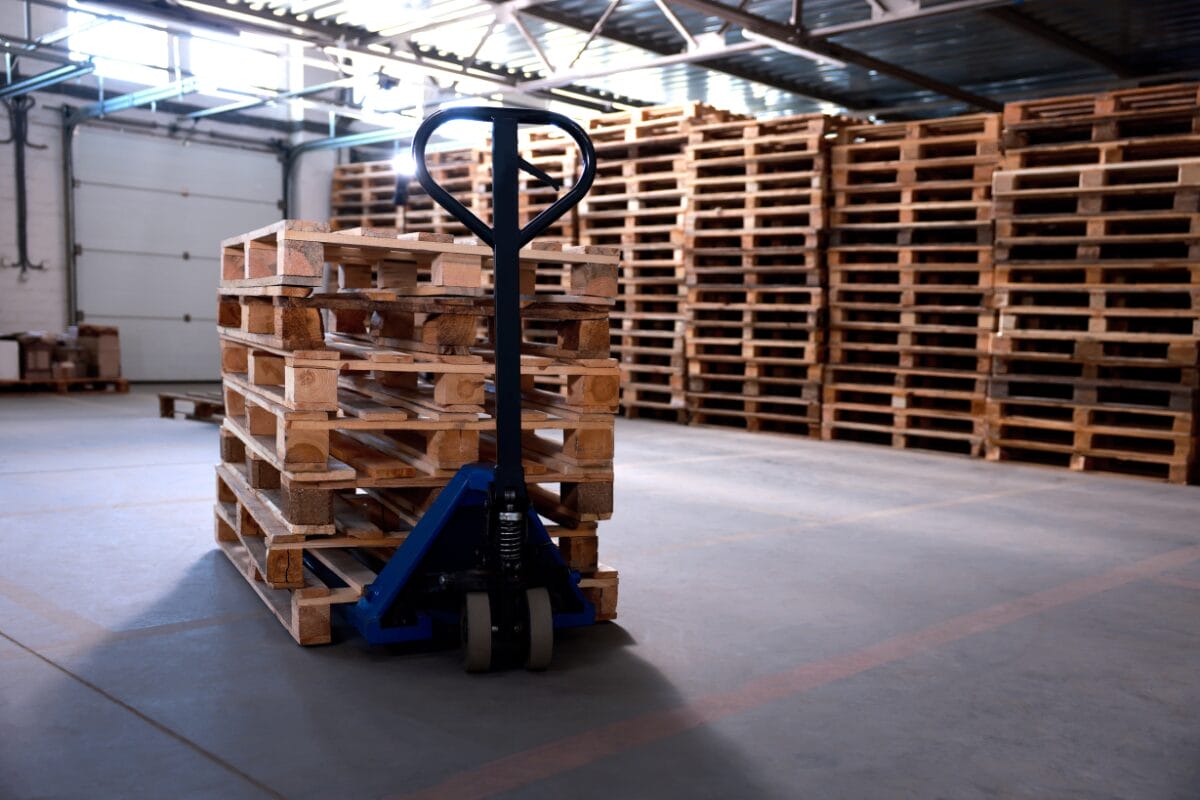
Most pallets built to the Australian standard measure between 130mm and 150mm in height. This clearance allows forklift tines and pallet jacks to move underneath the pallet safely from multiple directions.
Uniform pallet height also improves stability when pallets are stacked or handled by forklifts. Even stacking reduces movement inside trucks and storage areas, helping protect the goods being transported.
Predictable pallet height also assists warehouse operators in maintaining correct racking clearances and efficient forklift handling processes.
Load Ratings
Load capacity is measured in several different ways depending on how the pallet is used during handling and storage.
Three ratings are commonly referenced across warehouse operations.
| Load Type | Description |
| Static load | Weight supported while the pallet remains stationary on a flat surface |
| Dynamic load | Weight supported while the pallet is being moved by forklift or pallet jack |
| Racking load | Weight supported when the pallet sits across the warehouse racking beams |
The racking load rating is typically the most restrictive. In this situation, the pallet rests only on the outer beams of the rack, which concentrates pressure on the pallet structure.
Many pallet failures occur when loads exceed the racking capacity rather than the static load rating. Warehouses often assume pallets can support the same weight in every situation, but the stress placed on the structure changes depending on how it is supported.
Standard pine pallets commonly support loads of around one tonne in racking systems. Heavy-duty pallets designed for industrial applications can support significantly higher loads.
Selecting pallets with appropriate load ratings reduces the risk of structural failure and supports safer warehouse operations.
How Standard Australian Pallet Dimensions Affect Warehouse Racking
Pallet Compatibility with Racking Systems
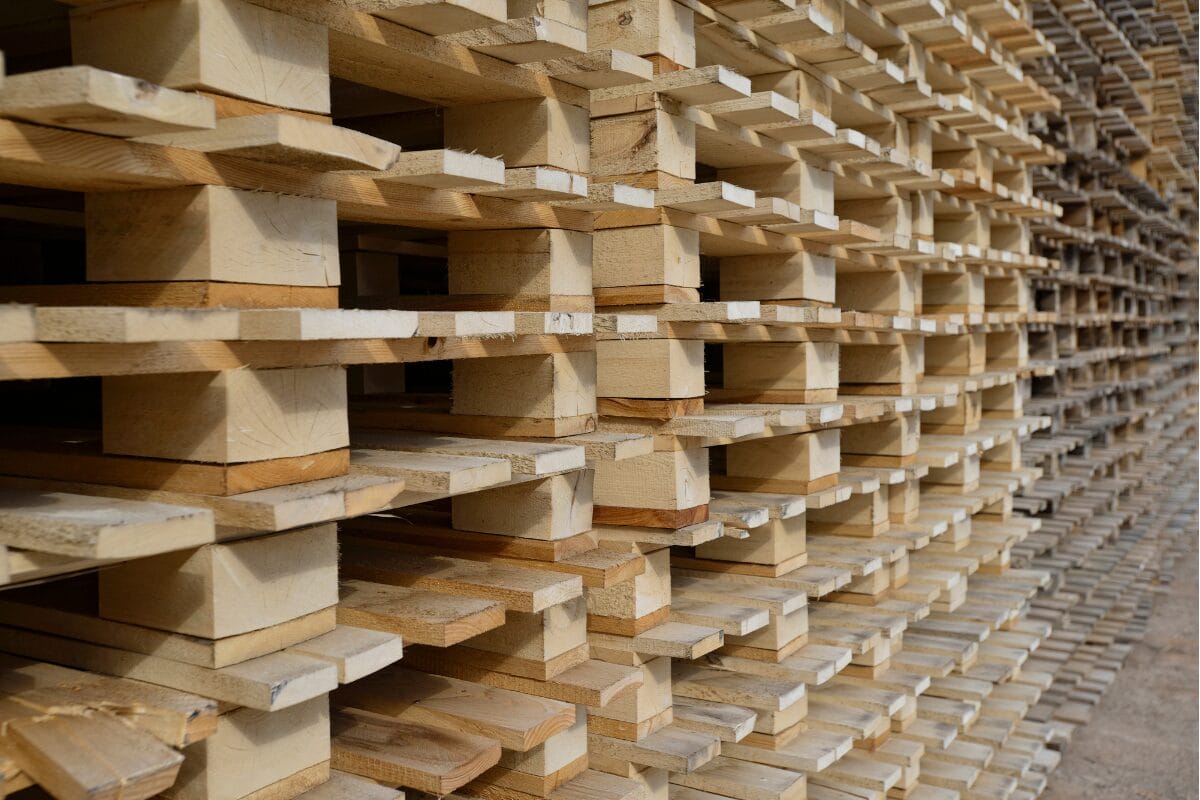
Warehouse storage systems are often designed around standard Australian pallet dimensions, ensuring pallets sit securely on racking beams during storage.
Most warehouse racking installations in Australia are designed to hold two pallets per storage bay. Beam spacing, rack depth and aisle layouts typically assume the standard pallet footprint used across Australia.
Load Distribution and Pallet Positioning
The standard pallet format allows a small overhang across racking beams. This helps distribute weight evenly across the supports and improves load stability.
Pallets that are too small may slip between beams, while oversized pallets can extend beyond the supports and create instability.
Using pallets that fall outside the standard format can create several operational challenges:
- Pallets extending beyond racking beams
- Uneven weight distribution
- Reduced storage capacity
- Increased risk of pallets slipping or falling
Warehouse operators must also consider how pallets are positioned on racking beams. Pallets should sit evenly across both beams so the load is distributed correctly.
Over time, uneven pressure can weaken deck boards or stringers, increasing the risk of pallet failure during storage.
Racking Safety and Australian Standards
Regular pallet inspections help identify damaged boards, cracked timber or loose fasteners that may affect load stability.
Warehouse racking installations must also comply with Australian Standard AS 4084, which requires storage equipment to operate within defined load limits and dimensional specifications.
Uniform pallet sizing helps maintain safe storage conditions while allowing warehouses to maximise available space.
Pallet Dimensions and Transport Efficiency
Truck and Trailer Loading Capacity
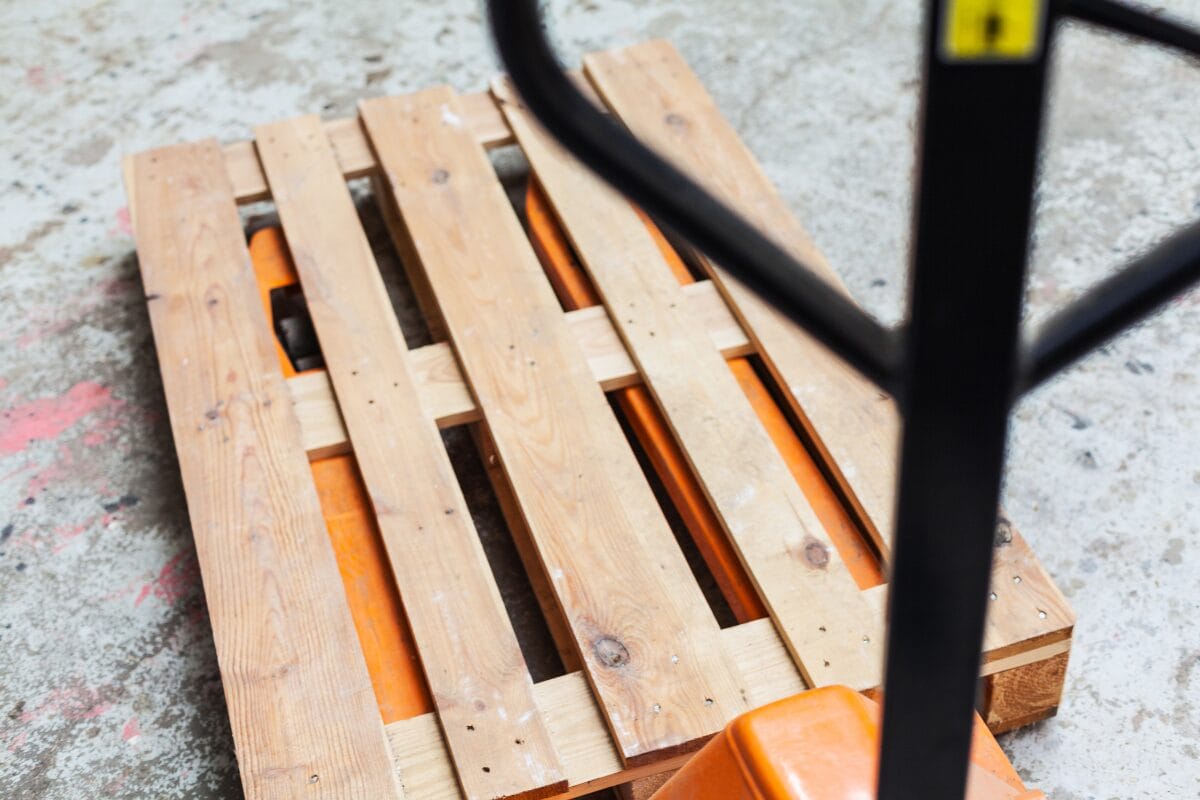
Pallet dimensions influence how goods are arranged inside trucks, containers and distribution vehicles.
The square pallet design used across Australia allows trucks to be loaded efficiently and helps distribute freight weight evenly.
A typical Australian semi-trailer carries around twenty pallets arranged in a stable layout that balances the load across the vehicle.
Freight Planning and Pallet Counts
Transport planners often calculate freight capacity using pallet counts rather than individual cartons. When pallet sizes remain consistent, logistics teams can calculate vehicle capacity quickly and maintain predictable loading patterns.
Cross-Docking and Distribution Efficiency
Consistent pallet sizing also simplifies cross-docking operations, where goods are transferred directly from inbound vehicles to outbound trucks with minimal storage time.
Using a uniform pallet format supports:
- Efficient truck loading
- Balanced weight distribution
- Faster loading dock operations
- Reduced handling time during freight movement
Freight operators also benefit when shipments from different suppliers use the same pallet format.
Pallet Dimensions in Retail and FMCG Distribution
Retail and FMCG supply chains rely on predictable pallet sizing to maintain efficient distribution operations.
Large retail warehouses receive and dispatch thousands of pallet loads every week. Standard pallet formats allow storage layouts, forklift movement and dispatch processes to operate smoothly.
The Australian pallet standard supports:
- Organised pallet racking layouts
- Efficient forklift movement
- Consistent freight handling processes
- Faster loading and unloading of deliveries
Retail environments also place high demands on pallet durability, as pallets must withstand frequent handling and repeated distribution cycles.
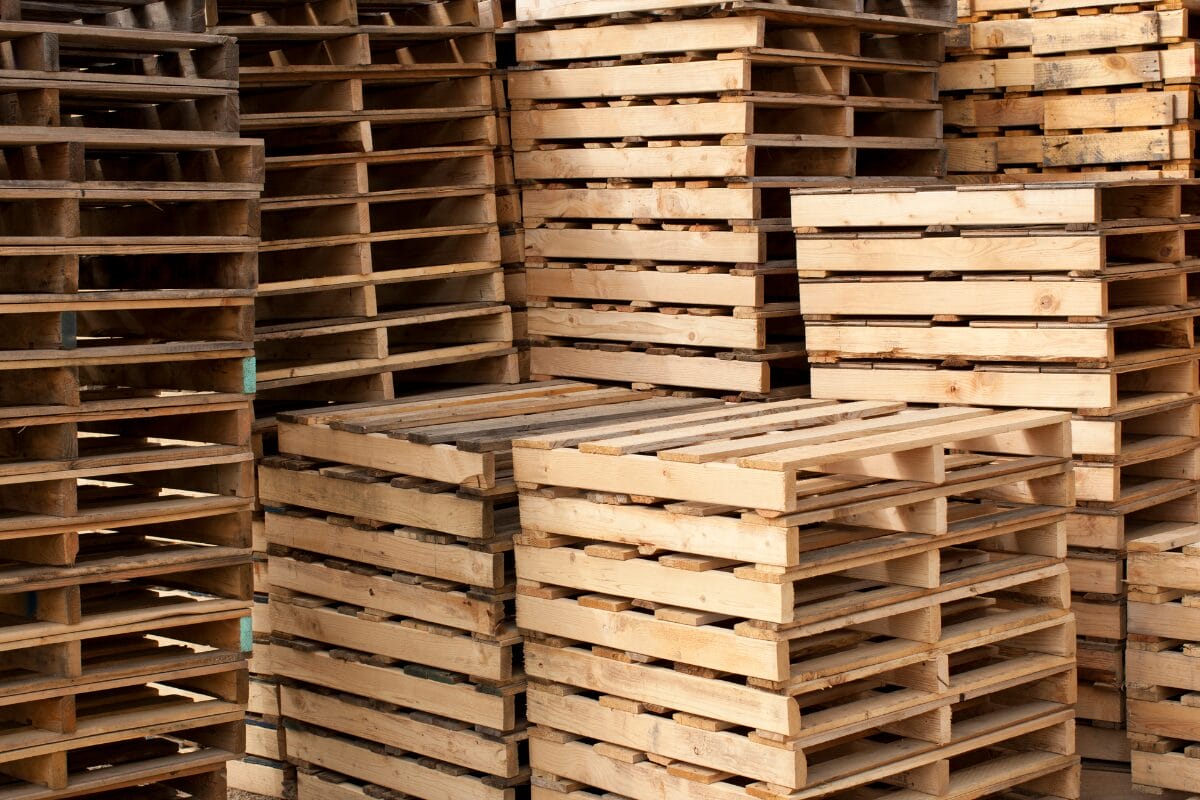
Pallet Use in Manufacturing Environments
Manufacturing facilities use pallets to move raw materials, components and finished products through different stages of production.
Raw materials often arrive palletised and are transferred to storage areas or production lines using forklifts. Finished products are typically palletised again before entering distribution channels.
Many facilities organise their storage layouts around the standard pallet format used in Australian logistics, which simplifies warehouse design and material handling processes.
Some manufacturing operations require pallets designed to suit specialised equipment or irregular product shapes. Custom pallet designs help stabilise loads that extend beyond the standard footprint.
Carefully designed pallets can also align with conveyor systems, automated handling equipment or specialised storage areas.
Pallet Requirements in Mining and Construction
Mining and construction industries frequently handle heavy materials and industrial equipment components.
These sectors often transport mechanical parts, building materials and machinery components that place significant stress on pallet structures during handling.
Standard pallets may not provide enough load capacity for these environments. Heavy-duty pallets are commonly used to support increased weight and tolerate demanding industrial conditions.
Industrial pallets may include:
- Thicker deck boards
- Reinforced structural components
- Stronger timber materials
- Higher load ratings
Outdoor environments also expose pallets to moisture, dust and temperature variation. Durable construction helps maintain structural integrity in these conditions.
Many suppliers in these industries continue to use the standard pallet footprint so their pallets remain compatible with transport and warehouse systems.
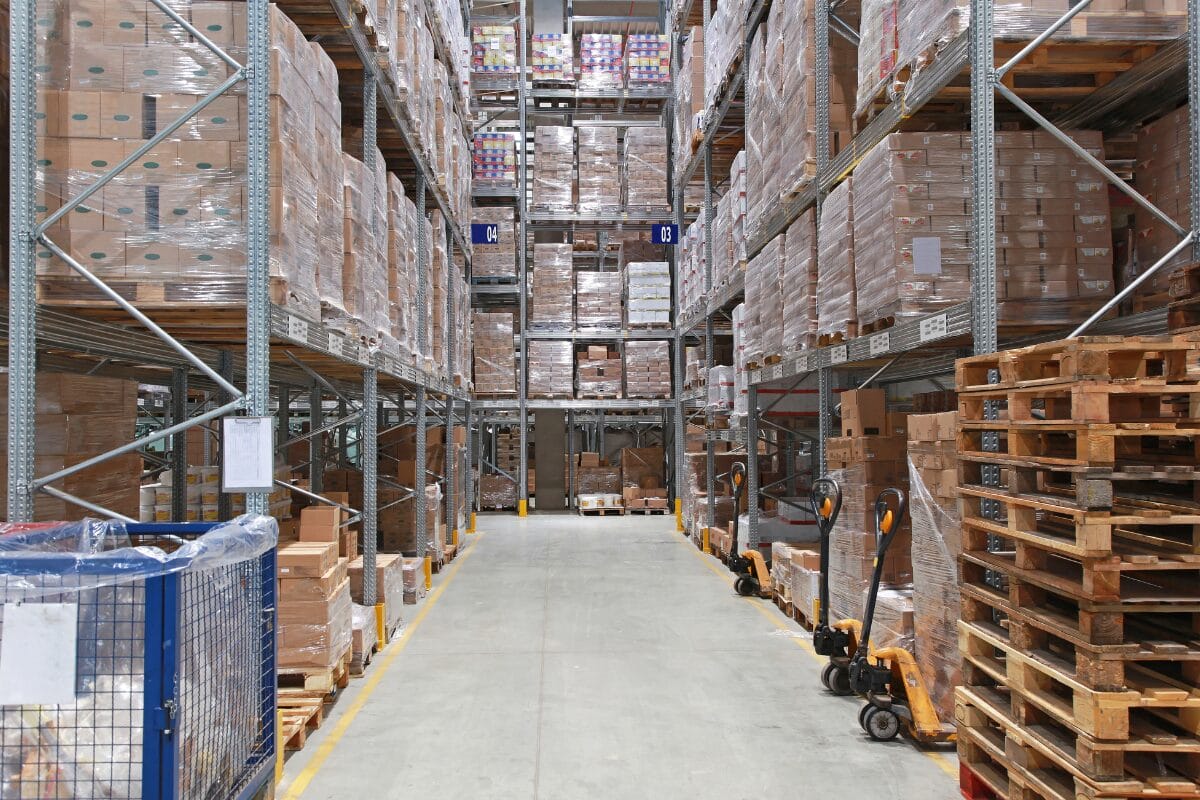
Pallets in Agriculture and Food Supply Chains
Agricultural producers and food processors rely heavily on pallets to move goods through packing facilities, storage and distribution.
Fresh produce, packaged foods and agricultural materials often move through several handling stages before reaching retailers, processors or export facilities.
Pallet selection in these environments must consider both structural performance and hygiene requirements.
Damaged pallets or exposed nails can damage packaging or create contamination risks. Facilities handling unpackaged food products may prefer materials that can be cleaned easily.
Plastic pallets are sometimes used because they resist moisture and support strict hygiene protocols. Timber pallets remain widely used for packaged goods due to their strength, availability and cost efficiency.
Export Pallets and ISPM 15 Requirements
International freight introduces additional requirements for wooden pallets.
Most countries enforce the International Standards for Phytosanitary Measures No. 15, commonly known as ISPM 15. This regulation requires timber packaging materials to undergo treatment that eliminates pests and insects.
Heat treatment is the most common compliance method used in Australia. The process heats the timber to a specific core temperature for a defined period to remove pests.
Once treated, pallets receive an IPPC compliance stamp confirming the timber meets international phytosanitary standards.
Exporters must ensure pallets used in international shipments carry valid treatment markings. Non-compliant timber packaging can result in inspections, quarantine delays or rejected cargo.
While standard Australian pallet dimensions work efficiently for domestic freight, exporters sometimes select alternative pallet sizes to optimise space inside international shipping containers. Some choose pallet formats that maximise container capacity depending on the destination market.
Heat-treated pallets help exporters move goods across borders without unnecessary disruption.
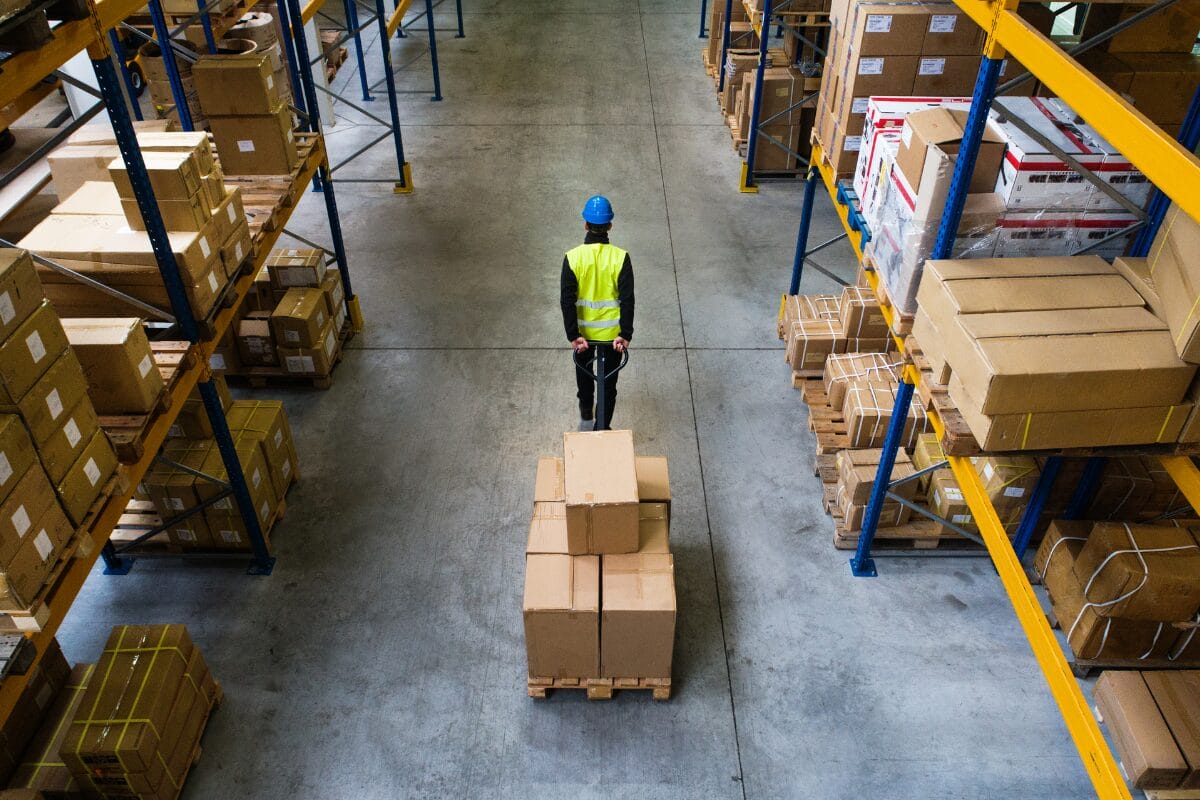
When Custom Pallet Dimensions Are Required
While standard Australian pallet dimensions suit most logistics environments, some operations require pallets designed around specific products or handling systems.
Custom pallet designs may be needed in several situations:
- Oversized machinery components
- Irregularly shaped products
- Unusually heavy loads
- Specialised storage systems
- Export container optimisation
Custom pallets help stabilise loads and prevent damage during transport. Proper design also improves storage efficiency inside warehouses and shipping containers.
Developing a custom pallet solution usually involves evaluating load weight, product dimensions and handling equipment used within the facility. Material choice is another important factor when selecting pallets for specific operational environments.
Timber and Plastic Pallets Compared
Timber pallets dominate the Australian market because they provide strong load capacity and cost-effective supply.
Plastic pallets serve specialised applications where hygiene or moisture resistance is particularly important.
| Feature | Timber Pallets | Plastic Pallets |
| Cost | Lower upfront cost | Higher purchase cost |
| Strength | Suitable for heavy loads | Moderate load capacity |
| Hygiene | Moderate | Excellent |
| Repairability | Can be repaired easily | Difficult to repair |
| Moisture resistance | Moderate | High |
Timber pallets remain the preferred choice for many industries, including logistics, manufacturing and construction. Plastic pallets appear more frequently in food production, pharmaceuticals and export operations.
How Palletwest Supports WA Businesses
Reliable pallet supply helps businesses maintain efficient logistics operations. Delays or inconsistent pallet quality can disrupt production schedules and distribution plans.
Palletwest works with warehouses, manufacturers and exporters across Western Australia to provide dependable pallet supply and practical operational advice.
Our services include:
- New timber pallets manufactured to Australian standard dimensions
- Second-hand pallets for cost-conscious operations
- Plastic pallets for specialised environments
- Custom pallet and timber crate manufacturing
- Heat treatment services for export compliance
Local manufacturing capacity and available stock allow many orders to be supplied within three to five days. Short lead times help businesses avoid supply disruptions and maintain consistent operations.
Our team also provides guidance on pallet selection based on load requirements, storage systems and freight considerations.
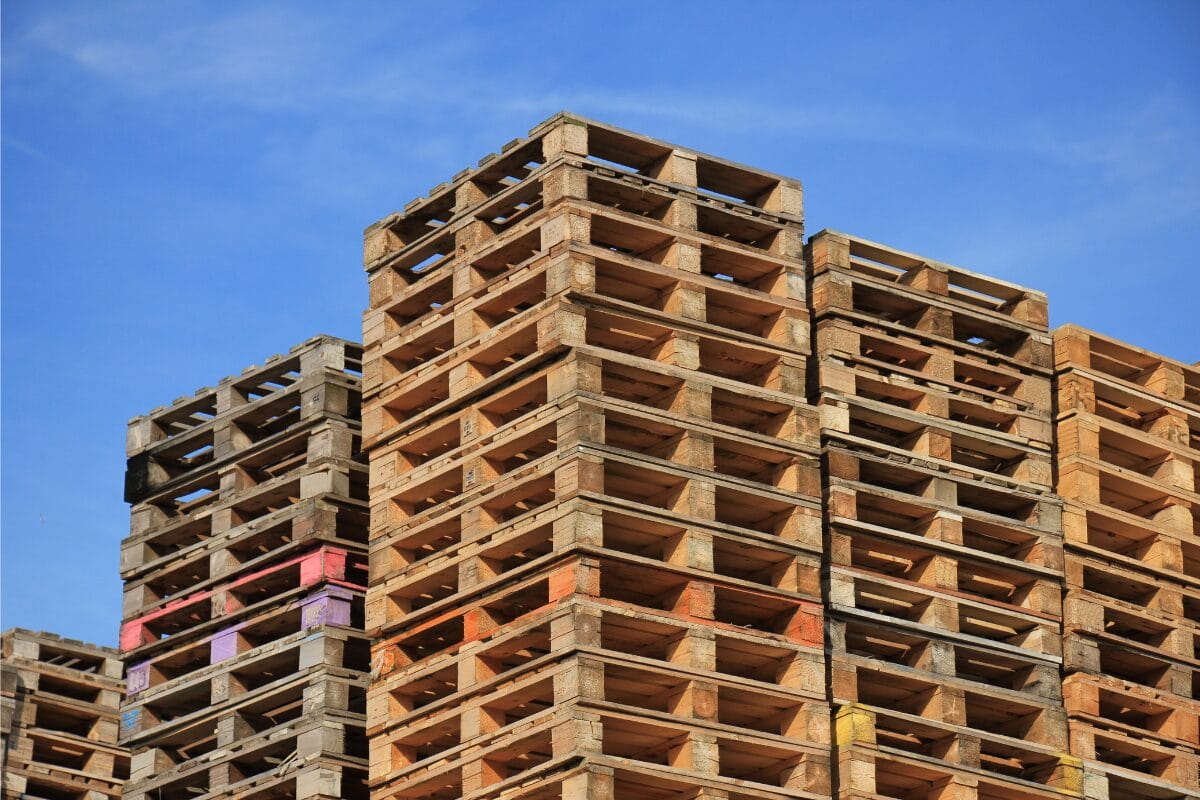
Selecting Pallets That Support Efficient Operations
Pallets form the foundation of many logistics operations. The dimensions, strength and design of each pallet influence how efficiently products move through warehouses, freight systems and distribution networks.
The Australian pallet standard provides a reliable format for most domestic distribution environments, integrating with warehouse storage systems, forklifts and transport vehicles used across Australia.
Some operations require custom pallets or specialised materials to support heavier loads, unique products or export requirements.
Need the right pallets for your operation? Speak with our team today. We’ll help you choose the right pallet solution and organise fast, reliable supply across Western Australia.
Frequently Asked Questions
Why are Australian pallets different from European or US pallets?
Australia uses a square pallet format designed to maximise space in domestic rail and road freight systems. European and US pallets use rectangular formats that better suit international container shipping.
Can I use Australian pallets in overseas racking systems?
Generally, no. Most international racking (especially in Europe or the USA) is built for the Euro pallet (800mm x 1200mm) or the US Military/GMA pallet (1016mm x 1219mm). An Australian pallet will likely be too wide for the aisles or too deep for the rack beams, creating a major safety hazard.
Does every wooden pallet need an IPPC stamp for domestic transport?
No. For transport within Australia, there is no legal requirement for heat treatment or ISPM 15 stamps. However, if your goods are travelling to Tasmania or specific biosecurity zones, there may be ‘cleanliness’ inspections to ensure no soil or pests are present, though the thermal treatment itself isn’t mandatory like it is for international borders.
Why is the 1165mm x 1165mm size the ‘Standard’ in Australia?
This specific dimension was popularised by CHEP and developed to suit the floor space of Australian railway wagons. The square design allowed for maximum ‘loading density’ in rail freight, which was the primary mode of long-distance transport when the standards were being established.
Do standard Australian pallet dimensions fit in a standard shipping container?
Standard ISO shipping containers have an internal width of roughly 2.35m. Because the standard Australian pallet is 1.165m wide, two pallets placed side-by-side (2.33m) leave almost zero tolerance for manoeuvring or pallet wrap overhang. Consequently, logistics teams often use ‘Export Pallets’ (1100mm x 1100mm) for international shipping instead of the domestic Australian standard.